Showing Posts From

Frugal living

25 Unusual Frugal Tips That Actually Save Money (Real Numbers)

25 Unusual Frugal Tips That Actually Save Money (Real Numbers)

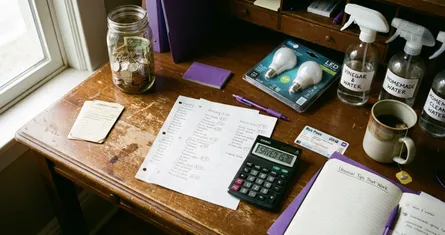
I used to think I was frugal. I'd obsess over exact weekly budget numbers, calculating every dollar down to the cent. I thought that level of control was the answer. Then I tracked my actual spending for three months. Turns out, I was missing hundreds of dollars in invisible waste - stuff that never showed up in my careful weekly tallies because it was baked into habits I didn't question. The phantom electricity drain from devices I thought were "off." The grocery store markdown schedule I'd never bothered to learn. The library services I was paying subscriptions to duplicate. The usual frugal advice? You've heard it. Make coffee at home. Cancel Netflix. Brown bag your lunch. That stuff works, but everyone's already doing it - or they've heard it so many times they tune it out. These 25 tips are different. They're the unusual ones that actually moved the needle when I got serious about saving money in ways that feel almost too extreme - but actually aren't once you try them. Real numbers. Effort ratings. No judgment on which ones fit your life. Let's get into it.Kitchen and Grocery Savings 1. Master the Markdown Schedule at Your Grocery Store Savings: $40-80/month Effort: Low (one conversation) Best for: Anyone who shops at the same store regularly Every grocery store has a markdown schedule. Meat gets marked down Tuesday mornings at my local store. Bakery items hit 50% off at 7pm daily. Produce clearance happens Wednesday afternoons. Here's the move: Ask the butcher or bakery manager directly. Most will tell you exactly when they do markdowns. Then adjust your shopping day accordingly. I started buying marked-down meat and freezing it immediately. Same quality, 30-50% less money. Over a year, that's $480-960 back in your pocket. 2. Grow a "Cut and Come Again" Window Garden Savings: $15-25/month Investment: $20-30 one-time Effort: Low (5 minutes daily) Best for: Renters and homeowners alike Forget trying to grow tomatoes in an apartment. Focus on lettuce, spinach, green onions, and herbs - things you can harvest repeatedly from the same plant. A sunny windowsill, some basic containers, and cheap seeds. Green onions regrow from scraps you'd throw away anyway. Lettuce keeps producing for months. Fresh herbs cost $3-4 per bunch at the store but pennies to grow. The ROI here is excellent: $25 in startup costs can yield $200+ in produce over a year. 3. Use the "Freezer Audit" Method Monthly Savings: $30-50/month in reduced waste Effort: Medium (30 minutes monthly) Best for: Families, batch cookers Most people have $50-100 worth of forgotten food in their freezer right now. Do a monthly audit: pull everything out, check dates, and plan the week's meals around what needs to be used. I found a pork roast I'd completely forgotten about. That's a $15 dinner I almost threw away. Build your weekly meal plan with grocery list around your freezer audit, not the other way around. 4. Negotiate Produce Prices at Farmers Markets Savings: 20-40% off produce Effort: Low (just ask) Best for: Farmers market shoppers, people comfortable negotiating Most people don't realize farmers market prices are negotiable, especially near closing time. Farmers would rather sell at a discount than pack up unsold produce. The script: "Would you take $X for this?" or "What's your best price if I buy three of these?" Near closing, try: "I'd love to take these off your hands - what could you do?" Works about 70% of the time. Worst case, they say no.Related Reading: If you're shopping solo, check out our grocery list on a budget for 1 person - the math changes completely when you're feeding just yourself.Home and Utilities 5. Unplug "Vampire" Devices (They're Costing You $100+/Year) Savings: $100-200/year Effort: Low (use power strips) Best for: Everyone, especially those with older electronics According to the Department of Energy, standby power (vampire draw) accounts for 5-10% of residential electricity use. That's $100-200 annually for the average home. The biggest offenders: gaming consoles, cable boxes, computer monitors, phone chargers, and anything with a digital clock or standby light. Solution: Smart power strips that cut power when devices are off, or just unplug things manually. I put my entertainment center on a power strip and flip it off when not in use. Took two weeks to become automatic. 6. Switch to LED Bulbs Room by Room Savings: $75-150/year Investment: $30-50 one-time Effort: Very low Best for: Homeowners and renters (take them when you move) If you haven't switched yet, LEDs use 75% less energy than incandescent bulbs and last 25 times longer. A single LED bulb saves about $7/year in electricity. Don't replace everything at once. Replace bulbs as they burn out, or start with high-use areas (kitchen, living room). ROI is typically under one year. 7. Use the "Thermal Layer" Strategy for Climate Control Savings: $20-40/month on heating/cooling Effort: Medium Best for: People in extreme climates, older homes Instead of heating or cooling your entire house to the same temperature, create thermal zones. Close vents in unused rooms. Use space heaters strategically. In summer, use fans to create airflow rather than cranking AC. Winter tip: A heated mattress pad ($40-60) uses far less electricity than heating your whole bedroom all night. Same comfort, fraction of the cost. 8. Make Your Own Cleaning Products Savings: $100-200/year Investment: $15-20 one-time Effort: Low once you learn recipes Best for: Anyone, especially those with sensitivities to commercial products White vinegar, baking soda, castile soap, and essential oils can replace almost every cleaning product under your sink. Basic all-purpose cleaner: 1 part white vinegar, 1 part water, few drops dish soap. Costs about $0.50 per spray bottle vs $4-6 for commercial versions. Glass cleaner, bathroom cleaner, floor cleaner - all can be made for pennies. There's a learning curve, but once you have your recipes dialed, you'll never go back. 9. Install a Programmable Thermostat (Or Use the One You Have) Savings: $150-180/year Investment: $25-250 (basic to smart) Effort: Low after setup Best for: Homeowners, long-term renters with permission The Department of Energy estimates you can save about 10% on heating and cooling by turning your thermostat back 7-10 degrees for 8 hours a day. The key: Set it and forget it. Program it to drop when you're at work and sleeping. Many people have programmable thermostats they've never actually programmed. Smart thermostats learn your patterns and optimize automatically. Payback period is typically under 2 years. Transportation and Commuting 10. Use the "Hypermiling" Technique Savings: 10-20% on gas ($200-400/year for average driver) Effort: Medium (behavior change) Best for: Daily commuters, anyone with a long drive Hypermiling is a set of driving techniques that maximize fuel efficiency:Accelerate gently (pretend there's an egg under the gas pedal) Coast to red lights instead of braking hard Maintain steady speeds Keep tires properly inflated (+3% efficiency) Remove roof racks when not in use (5-25% drag reduction)I improved my fuel economy from 28 to 33 mpg just by changing how I drive. At current gas prices, that's real money. 11. Stack Errands Geographically Savings: $50-100/month on gas Effort: Low (just planning) Best for: Suburban drivers, families Instead of making separate trips for groceries, pharmacy, and the hardware store, plan routes that hit everything in one efficient loop. Better yet, batch your errands weekly. One trip on Saturday instead of four trips throughout the week. Less gas, less time, less impulse spending at each stop. 12. Maintain Your Car on Schedule (It's Cheaper Than Repairs) Savings: $500-2,000/year in avoided repairs Investment: $200-400/year in maintenance Effort: Low (just schedule it) Best for: Anyone with a car over 3 years old Skipping oil changes to save $40 can cost you a $4,000 engine replacement. Ignoring worn brakes can damage rotors. Neglecting tire rotation leads to premature replacement. Keep a simple log. Follow the manufacturer's maintenance schedule (in your owner's manual). Budget $50-100/month for maintenance and you'll almost always come out ahead vs. major repairs.Shopping and Spending 13. Use the "72-Hour Rule" for All Non-Essential Purchases Savings: Varies widely ($500-2,000/year for most people) Effort: Low (just wait) Best for: Impulse buyers, online shoppers Before buying anything non-essential over $25, wait 72 hours. Put it in your cart and walk away. Most of the time, you'll forget about it or realize you don't actually need it. This single habit probably saves me $100/month on stuff I would have bought, used once, and regretted. 14. Borrow Before You Buy Savings: $50-200/month depending on hobbies Effort: Low Best for: DIYers, hobbyists, parents Before buying any tool, equipment, or gear - ask: "Can I borrow this?"Libraries lend more than books (see tip #25) Neighbors have tools you'll use once Buy Nothing groups and local Facebook groups Tool libraries exist in many citiesI've borrowed a pressure washer, circular saw, and carpet cleaner in the past year. Saved easily $200+ on stuff I'd have used once and stored forever. 15. Buy Generic for 80% of Products Savings: 20-40% on groceries and household goods Effort: Very low Best for: Everyone Store brands are manufactured in the same facilities as name brands about 80% of the time. The difference is literally just packaging and marketing. Start with: medications (FDA requires identical active ingredients), cleaning supplies, pantry staples, and dairy. Keep name brands only where you genuinely notice a quality difference. Generic Benadryl is identical to name brand but costs 60% less. Same for ibuprofen, cereal, cheese, flour, sugar, and most canned goods. 16. Use Cashback Apps and Credit Card Rewards Strategically Savings: $300-600/year Effort: Low after setup Best for: People who pay their credit card in full monthly This only works if you pay your balance in full. Credit card interest will destroy any rewards. Stack your savings: cashback credit card (2-5%) + store app rewards + manufacturer coupons. On a $600/month grocery budget, that's $150-300/year just from the credit card. Cashback apps like Ibotta, Fetch, and Checkout 51 add another layer. 10-15 minutes of setup, then scan receipts. I average $20-30/month with minimal effort. Lifestyle and Services 17. Call and Negotiate Every Annual Bill Savings: $200-500/year Effort: Medium (phone calls) Best for: Anyone paying for recurring services Once a year, call every service provider and ask for a better rate: internet, phone, insurance, subscriptions. The script is simple: "I've been a customer for X years. What can you do to lower my bill?" Success rate is surprisingly high - about 70% for me. Even a $10/month reduction on three services is $360/year. Insurance is the big one. Get quotes from competitors annually, then call your current provider with those numbers. 18. Use the Library Like It's 1995 Savings: $50-150/month Effort: Very low Best for: Readers, movie watchers, families Your library card gives you free access to:Books, audiobooks, ebooks (Libby app) DVDs and streaming services (Kanopy, Hoopla) Magazine and newspaper subscriptions Museum passes (many libraries have these) Learning platforms (LinkedIn Learning, language apps)If you're paying for Audible ($16/month), newspapers ($15/month), and streaming services ($15-50/month), your library likely offers all of it free. 19. Host Potlucks Instead of Picking Up the Tab Savings: $100-200/month on dining out Effort: Medium Best for: Social people, those who entertain Dinner out with friends: $50-100. Hosting a potluck: $15-20 for your contribution plus whatever's already in your pantry. You still get the social connection without the restaurant markup. Better conversations too - no competing with background noise. 20. Use Your Employer's Overlooked Benefits Savings: $500-2,000+/year Effort: Low (just research) Best for: W-2 employees Most people don't use half their employer benefits. Check for:HSA employer contributions (free money) 401k match (literally free money you're leaving on table) Employee discounts (often 10-25% at major retailers) Gym membership subsidies Transit benefits (pre-tax dollars) Employee Assistance Programs (free therapy sessions, financial counseling)If your employer matches 401k contributions, not contributing at least to the match is turning down free money. Even our 2026 budget templates build in retirement contributions for this reason. Advanced Frugal Moves 21. Time-Shift Your Electricity Usage Savings: $20-50/month Effort: Medium Best for: People with time-of-use electricity rates Many utilities now have time-of-use rates where electricity costs 2-3x more during peak hours (typically 4pm-9pm). Run dishwasher, laundry, and other high-draw appliances during off-peak hours. Some smart plugs can automate this. Check if your utility offers time-of-use plans - the savings can be substantial. 22. Practice "Inventory Shopping" Before Grocery Runs Savings: $30-60/month Effort: Low (15 minutes weekly) Best for: Families, batch cookers Before writing your grocery list, shop your own kitchen first. Check every cabinet, the back of the fridge, the freezer. Build meals around what you already have. Most households have 1-2 weeks of meals hiding in their existing inventory. You just have to look. 23. Use the "Cost Per Use" Calculation for Big Purchases Savings: Prevents $100s-1,000s in regretted purchases Effort: Low (just math) Best for: Anyone considering a significant purchase Before any purchase over $50, calculate the cost per use: A $200 coat worn 100 times = $2/wear. Good investment. A $200 gadget used 5 times = $40/use. Bad investment. This mental model stops emotional purchases and helps you invest in quality where it matters. 24. Join a Buy Nothing Group Savings: $50-200/month Effort: Low Best for: Community-minded people, parents Buy Nothing groups exist in most neighborhoods on Facebook. People give away everything from furniture to baby gear to extra garden produce. I've gotten a working vacuum, kids' clothes, moving boxes, and plant cuttings - all free. The catch is you give things away too, which clears clutter and helps neighbors. 25. Check Your Local Library of Things Savings: $100-500/year on tools and equipment Effort: Low Best for: DIYers, hobbyists, renters A growing number of libraries and community organizations now lend tools, camping gear, kitchen appliances, and more. There are approximately 60+ "Library of Things" locations across the US. Before buying a tent for one camping trip, a sewing machine for one project, or a power washer for one afternoon - check if you can borrow it. Making This Actually Work Here's the reality: you won't do all 25 of these. You shouldn't even try. Pick three that fit your life. Master those. Then maybe add another. The tips that save me the most:Markdown schedule mastery - $60/month average 72-hour rule - probably $100/month in avoided purchases Generic switching - $50/month on groceries Annual bill negotiation - $400/year in one afternoonThat's over $3,000/year from four habits. Your numbers will be different. Someone who drives a lot will get more from hypermiling. Someone who hosts often will save more on potlucks. Someone with time-of-use electricity rates might save significantly on tip #21. Start with the ones that match your biggest spending categories. That's where the leverage is.What's your favorite unusual frugal tip? Drop it in the comments - I'm always looking for new ones to test. Want more strategies like these delivered to your inbox? Sign up for the Adapt Your Dollars newsletter - one actionable money tip every week, no fluff.

Chris Chris 04 Jan, 2026
Extreme Frugal Ways to Save Money (Without Burning Out)

Extreme Frugal Ways to Save Money (Without Burning Out)

I tried extreme frugality once. Obsessed over hitting exact weekly budget numbers, tracked every dollar, stressed over pennies. Saved some money. Lost my mind. The problem wasn't the frugality—it was that I didn't know when to stop. I cut everything, micro-managed the small stuff, ignored the big wins. Every week I'd beat myself up for going $8 over budget on groceries while ignoring my $400 car payment. Here's what I learned: Extreme frugality works when you have guardrails. When you know which cuts move the needle and which ones just make you miserable. When you treat it like a sprint, not a lifestyle. Groceries are up 28.2% since 2019. Car ownership costs $11,577 per year. Most Americans are saving just 4.7% of their income. The pressure to cut spending is real, and you're probably already doing everything you can think of. But here's the thing—most people focus on the wrong stuff. They stress over $4 lattes while ignoring $400 car payments. They meal prep to save $30/week but keep cable at $147/month. This guide ranks extreme frugal tactics by actual ROI. You'll see three real budgets showing what 38-45% savings rates actually look like. And you'll get the guardrails I wish I'd had—so you can cut ruthlessly without losing your mind. Extreme vs. Aggressive: Know Which One You Actually Need Let's define terms because "extreme frugal" gets thrown around like confetti. Moderate frugality: You cut spending to 80-85% of typical American levels. You cook most meals, avoid impulse buys, shop sales. Comfortable but intentional. Aggressive frugality: You're at 70-75% of typical spending. One car instead of two. No cable. ALDI over Whole Foods. This is where most people should live. Extreme frugality: You're at 60-70% or lower. Roommates. No car. Beans and rice. Library for entertainment. This is a temporary tool, not a permanent lifestyle. The truth is, most people need aggressive, not extreme. Extreme is for specific goals—paying off debt fast, saving for a house down payment, surviving a job loss. It's a sprint. Not a marathon. If you're thinking about going extreme, ask yourself: What am I sprinting toward, and how long can I sustain this? The 5-Star Moves vs. The Penny-Pinching Waste of Time Not all frugal tactics have the same ROI. Some take 5 minutes and save $400/month. Others take 2 hours and save $4. Here's the breakdown:Tactic Time Investment Monthly Savings ROI RatingSell car, go car-free 20 hours upfront $400-965 ⭐⭐⭐⭐⭐Get a roommate 10 hours upfront $300-600 ⭐⭐⭐⭐⭐Cut all subscriptions 2 hours $50-150 ⭐⭐⭐⭐⭐Switch to ALDI/discount grocer 1 hour/week $80-150 ⭐⭐⭐⭐Meal prep Sundays 3 hours/week $100-200 ⭐⭐⭐⭐Cut cable for streaming 30 minutes $95 ⭐⭐⭐⭐Downgrade phone plan 1 hour $30-50 ⭐⭐⭐LED lightbulb swap 2 hours $18 ⭐⭐Reuse tea bags Ongoing $4 ⭐Focus on the 5-star moves first. The housing-car-subscriptions trifecta is where the real money is. Once you've tackled the big three, there are dozens of unusual frugal tips that actually save money - things like learning your grocery store's markdown schedule or negotiating at farmers markets. Not the generic "make coffee at home" advice everyone ignores. If you're stressing over reusing tea bags but still paying $147/month for cable, you're doing it backwards.What $905/Month in Savings Actually Looks Like (3 Real Budgets) Let's get specific. Here's what extreme frugality looks like in real numbers. Budget 1: Single Person, $2,400/Month Income Standard spending: $2,400 Extreme frugal spending: $1,495 Monthly savings: $905 (38%)Rent (studio with roommate): $550 Groceries (ALDI, bulk): $180 Transportation (bus pass): $70 Phone (Mint Mobile): $15 Utilities (split): $45 Internet (split): $25 Entertainment (library, free events): $10 Haircut (Great Clips quarterly): $10 Misc/buffer: $90 Total: $1,495Budget 2: Couple, $4,800/Month Income Standard spending: $4,800 Extreme frugal spending: $2,625 Monthly savings: $2,175 (45%)Rent (1BR): $900 Groceries (ALDI, bulk, minimal meat): $280 Transportation (1 beater car): $150 Phone (2 lines, Mint): $30 Utilities: $85 Internet: $40 Car insurance: $90 Entertainment: $50 Total: $2,625Budget 3: Family of 4, $5,500/Month Income Standard spending: $5,500 Extreme frugal spending: $3,325 Monthly savings: $2,175 (40%)Rent (2BR apartment): $1,100 Groceries (extreme bulk, minimal meat): $400 Transportation (1 beater car): $180 Phone (2 lines): $30 Utilities: $120 Internet: $40 Car insurance: $110 Kids activities (library, parks): $45 Misc: $300 Total: $3,325Notice what these budgets have in common: One housing unit below market rate. One car max. Almost zero subscriptions. ALDI-level groceries. No eating out. This is doable, but it's not forever. Housing: The $300-600/Month Opportunity Hiding in Plain Sight Housing is your biggest expense. It's also where most people refuse to compromise. But here's the thing—cutting housing by even 20% can save you more than every other tactic combined. The moves: Get a roommate. Studio apartments in my city average $1,200. Splitting a 2BR costs $600 each. That's $600/month back in your pocket. Yes, you lose privacy. Yes, it's not ideal. But if you're trying to save $15,000 in a year, this is the move. House hack. Rent a 3BR, sublet two rooms. Your rent goes from $1,500 to $500 or less. I know people who live rent-free this way. Downsize aggressively. Moving from a 2BR to a 1BR might save $200-400/month. Moving from a house to an apartment might save even more. The question is: How badly do you want the money? If you're new to frugality, start with housing. It's uncomfortable, but it's where the money is. Ditch Your Car, Save $400+/Month (Yes, Really) AAA says car ownership costs $11,577 per year in 2025. That's $965/month. Most people hear that and think, "Yeah, but I need my car." Maybe. Or maybe you've just never seriously considered the alternative. Option 1: Go car-free. If you live in a city with decent transit, sell the car. Use a bus pass ($70/month), bike, and the occasional Uber. Even with $100/month in rideshares, you're saving $700+/month. Option 2: Downgrade to a beater. Sell your $18,000 financed car, buy a $3,000 beater in cash. Your monthly costs drop from $400 (payment + insurance + maintenance) to $150. That's $250/month saved. Option 3: Carpool. Split a car with a partner or roommate. Insurance, gas, maintenance—all cut in half. Turns out, the second-biggest expense in your life might also be the easiest to cut. Grocery Tactics That Don't Make You Eat Like a Monk Food is where most people spin their wheels. They clip coupons, chase sales, meal plan like their life depends on it—and save $20. Here's what actually moves the needle: Shop ALDI or discount grocers only. The USDA says a single person spends $392-465/month on a "low-cost" food plan. At ALDI, you can hit $180-220. The food is fine. The savings are real. Buy in bulk. Rice, beans, oats, pasta—buy the 20-pound bags. A month's worth of rice costs $8 instead of $25. Cut meat to 2-3 times per week. Chicken thighs are cheap, but beans and lentils are cheaper. Going from daily meat to twice-weekly can cut your grocery bill by 20-30%. Seasonal produce only. Strawberries in December cost $6. In June, they're $2. Eat what's in season, freeze the rest. Meal prep Sundays. Cook once, eat all week. Batch chili, stir-fry, casseroles. This isn't about Instagram-worthy meal prep containers. It's about not spending $12 on Chipotle because you're too tired to cook. The goal isn't to eat sad food. It's to spend $180 instead of $400 without hating your life. Need a system? Check out our meal planning guide for the step-by-step. And if you're shopping for one, here's a realistic $57/week meal plan using actual USDA prices - not those fantasy $20/week plans. The Death by 1,000 Cuts You're Ignoring Subscriptions are insidious because they're small. $9.99 here, $14.99 there. You barely notice. But here's the thing—they add up to $100-200/month for most people. The 30-day cancel experiment: Cancel every subscription today. All of them. Netflix, Spotify, gym, meal kits, cloud storage, password managers—everything. For 30 days, use free alternatives. Library for books and movies. YouTube for music. Bodyweight workouts at home. After 30 days, add back only what you genuinely missed. Most people end up keeping 1-2 instead of 8-10. Phone plan: You're probably paying $60-80/month for unlimited data you don't use. Switch to Mint Mobile ($15/month for 4GB). If you need more data, jump to the $25 plan. That's $35-55/month saved. Cable: The average cable bill is $147/month. Streaming services (Netflix, Hulu, etc.) average $52/month. That's $95/month saved. Or go full extreme: Cancel streaming too, use the library. $147/month back. Gym: Planet Fitness is $10/month if you need a gym. Bodyweight workouts at home are free. Most $50-70/month gym memberships are aspirational, not actual. If you want to take this further, try a no-spend challenge for a full month reset. When Extreme Frugality Turns Toxic (Warning Signs You Can't Ignore) Here's what nobody tells you: Extreme frugality can break you if you're not careful. Warning signs you've gone too far:Social isolation. You stop seeing friends because every hangout costs money. You decline weddings, birthdays, dinners. You're saving money but losing relationships. Mental health decline. Constant anxiety about spending. Guilt over buying soap. You're so stressed about money that you can't think straight. Binge cycles. You hold out for weeks, then crack and blow $200 at Target. The restriction-binge loop erases your progress. Physical health issues. Skipping doctor visits to save the copay. Eating nothing but ramen because it's cheap. Your body pays the price.If you're experiencing any of these, pump the brakes. Extreme frugality is a tool, not a prison sentence. The 90/10 rule: Cut 90% of your spending ruthlessly. Keep 10% for sanity. That might be $50/month for coffee with friends. Or $30/month for your favorite streaming service. The point is—one small thing that makes you feel human. Permission to stop: Set milestones. "I'm doing extreme frugality until I save $10,000." Or "until I pay off this debt." Or "for 6 months." Then ease back to aggressive frugality. You don't have to live like this forever. The difference between frugal and cheap matters here. Frugal is strategic. Cheap is harmful.Your 90-Day Blitz: From Broke to $500+ Breathing Room You don't need a year-long plan. You need 90 days of focus. Month 1: The Big 3 Week 1-2:Audit housing. Can you get a roommate? Downsize? Move? Audit transportation. Can you sell your car? Downgrade? Carpool? Cancel every subscription.Week 3-4:Implement housing changes if possible (this might take longer, but start the process) List car for sale if going that route Track spending for 30 days to establish baselineMonth 2: Food & Utilities Week 1:Switch to ALDI or discount grocer Plan weekly meals, buy in bulk Cut meat to 2x/weekWeek 2-3:Set up meal prep routine (Sundays) Audit utilities - can you lower heat/AC, swap to LEDs, cut cable? Our guide to unusual frugal tips covers vampire devices, thermal zones, and DIY cleaning products that slash utility costs.Week 4:Refine grocery system based on what workedMonth 3: Income & Refinement Week 1-2:Sell stuff you don't need (extra $100-500 one-time) Look for side income if neededWeek 3-4:Review progress—how much are you actually saving? Adjust what's not working Set next 90-day goalThe goal isn't perfection. It's momentum. If you save $500/month for 90 days, that's $1,500 in the bank. That's breathing room. That's progress. Time to Sprint (Not Stumble) You've seen the numbers. You know the moves. You understand the guardrails. Extreme frugality isn't about deprivation. It's about focus. It's about cutting ruthlessly on the things that don't matter so you can build the life you actually want. You don't need to do this forever. Six months of extreme frugality can save you $5,000-10,000. A year can change your entire financial trajectory. But only if you do it with intention and know when to stop. Pick your top three moves. Housing, car, subscriptions—that's where the money is. Everything else is noise. Set your timeline. Three months? Six? A year? Put it on the calendar. This is a sprint, not your new identity. Track your progress weekly. Every $500 saved is proof this works. Every month you stay on track is momentum you can't afford to lose. The grocery bills aren't getting cheaper. Car costs aren't dropping. The pressure isn't going away. But you can build a buffer. You can save $500, then $1,000, then $5,000. You can give yourself breathing room. Once you've built some savings, you need a system to keep it growing. Our 2026 budget guide has ready-to-use templates for $45K-$75K salaries. Pick one move from the 5-star list. Do it this week.

Chris Chris 03 Jan, 2026
Grocery List on a Budget for 1: 3 Weeks for $47.83

Grocery List on a Budget for 1: 3 Weeks for $47.83

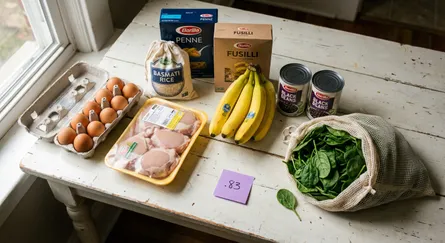
It's Wednesday. Payday is Friday. You have $50 in your account and absolutely nothing to eat except half a jar of salsa and questionable leftovers. I've been there. The worst part wasn't the empty fridge - it was the mental math. Walking through the store thinking "Can I afford this?" while trying to figure out what won't go bad before I can eat it. I once spent three hours obsessing over hitting my exact weekly budget number, buying only the "right" things. Then half of it rotted in my fridge because I couldn't eat that much broccoli before it turned to mush. Here's the thing: Shopping for one person feels like a scam. Family packs are cheaper per serving, but you're one person. Bulk is a better deal, but half of it expires. Meal plans are designed for families of four, so you end up eating the same chicken breast for six days straight or throwing money in the trash. But here's what I learned: You don't need to eat rice and beans for three weeks. You just need a smarter list. This is the exact grocery list I used when I had $47.83 to last until my next paycheck. Real prices. Real meals. Zero food waste. Why Shopping for One Feels Like a Scam (And How This List Fixes It) The grocery industry isn't built for single people. It's built for families buying in bulk, splitting portions, and cooking dinner for four. When you're shopping for one, you hit what I call the single-person penalty. The 5-pound bag of potatoes is $3.99 (80 cents per pound). The single potato is $0.89 (89 cents per pound). You pay more for buying less. Family chicken breast pack: $2.99/lb. Single-serve chicken: $5.99/lb. Same meat, different package, double the price. Then there's the portion problem. Recipes serve 4-6 people. You're one person. So you either eat leftovers for a week straight (hello, food fatigue) or you throw away half of what you bought. Either way, you're wasting something - money or food. And finally, the boredom trap. Eating alone already feels lonely. Eating the same three meals on repeat because that's all you can afford? That's how you end up ordering DoorDash at 9pm because you can't face another bowl of sad pasta. What this list does differently: It's built around ingredient overlap. Every item gets used in at least three different meals. Nothing sits in your fridge going bad. Proteins rotate so you don't get bored. And the portions are right-sized for one person, not a family of four trying to meal prep for the week. The truth is: You can eat real food on a tight budget if you stop shopping like you're feeding a family. Three Budget Tiers: Pick Your Week ($35 / $50 / $70) Not every week is the same. Week 1 after payday? You might have $70 to spend. Week 3 when rent is due? You might be down to $35. Here's what you're eating at each level:Budget Tier What You're Eating Best For$35/week Rice, beans, eggs, frozen veggies, minimal meat Emergency mode, Week 3 stretch$50/week Chicken thighs, ground turkey, pasta, fresh + frozen veggies, dairy Sweet spot, sustainable long-term$70/week More protein variety, fresh produce, snacks, condiments Week 1 after payday, building pantryHonest take: The $50 tier is where you want to live most of the time. It's tight but not miserable. You're eating real meals, getting protein, not hating your life. The $35 tier is for emergency mode when you're stretching to payday. The $70 tier is for stocking up on pantry staples and treating yourself to fresh fruit without doing mental math. The list below is the $47.83 tier - right in the sweet spot. Enough variety to stay sane, cheap enough to fit a tight budget. If you want more ideas for cheap meals or need a complete week-by-week meal plan using 2026 USDA prices, I've got you covered. The $47.83 Grocery List (Aldi Prices, January 2025) Here's the full breakdown. These are actual Aldi prices from January 2025. Your totals might vary by $2-5 depending on location and what's on sale.ProteinsEggs (18 count): $2.89 Chicken thighs (family pack, 2.5 lbs): $4.99 Ground turkey (1 lb): $3.49 Black beans (2 cans): $1.38 ($0.69 each)Protein total: $12.75 VegetablesFrozen mixed vegetables (2 bags, 12 oz each): $1.98 ($0.99 each) Fresh spinach (5 oz container): $1.49 Onions (2 lb bag): $1.29 Carrots (1 lb bag): $0.79 Canned diced tomatoes (2 cans): $1.38 ($0.69 each)Vegetable total: $6.93 Grains & StarchesRice (2 lb bag): $1.99 Pasta (2 boxes, 16 oz each): $1.58 ($0.79 each) Bread (whole wheat loaf): $1.29 Oats (18 oz canister): $1.79Grains total: $6.65 DairyMilk (half gallon): $1.89 Shredded cheese (8 oz): $1.99 Butter (1 stick): $1.49Dairy total: $5.37 Pantry & FlavorPeanut butter (16 oz): $1.99 Garlic (bulb): $0.49 Salt, pepper, olive oil: (assume you have basics or borrow $2 if needed) Hot sauce or salsa (8 oz): $1.29Pantry total: $3.77 ExtrasBananas (4-5): $0.79 Coffee or tea (if needed): $2.99 Flour tortillas (10 count): $1.49Extras total: $5.27TOTAL: $47.83 (before tax; some states don't tax groceries) This list assumes you already have salt, pepper, and cooking oil. If you don't, grab a $2 bottle of vegetable oil and a $1 salt/pepper combo from the dollar store. It'll last months. Store-by-Store Strategy: What to Buy Where Not everyone has an Aldi. Here's where to shop if you don't, and what to buy where to stretch every dollar. Aldi (Primary - 80% of your list) Why: Lowest prices, no brand markup, fast in-and-out shopping. Buy here: All proteins (chicken, eggs, ground meat), dairy, frozen vegetables, grains (rice, pasta, bread), canned goods. Skip: Fresh produce variety is limited. Organic stuff is overpriced compared to Walmart. Walmart (Fill-ins - 15%) Why: Bigger selection, price match guarantee, open 24/7. Buy here: Fresh produce Aldi doesn't carry, spices, condiments, anything on clearance. Skip: Name-brand proteins (way overpriced compared to Aldi), dairy (Aldi wins by $1-2 per item). Dollar Store (Emergency - 5%) Why: When you're $5 short and need to make it work. Buy here: Canned beans, pasta, bread, spices, snacks. Skip: Meat (sketchy quality), fresh produce (goes bad fast), anything refrigerated. Quick decision tree:Shopping for the week? Start at Aldi. Need one or two things? Walmart. Literally have $10 left? Dollar store, then fill gaps at Aldi.Cooking for One Without Waste: The Rotation System Cooking for one person sucks. Let's be real. You open a recipe that serves 4-6, cut everything in half, cook it, and then eat the same meal for three days straight until you'd rather starve than look at it again. The fix isn't meal prep. It's the 5-Meal Rotation. Instead of cooking seven different dinners or making one giant batch on Sunday, you rotate between five meals. Cook one meal, eat it for dinner, pack leftovers for tomorrow's lunch. The next night, make a different meal. By the time you loop back to Meal 1, it's been almost a week - you're not sick of it yet. The 5-Meal Rotation (from the $47.83 list):Scrambled eggs + spinach + toast (breakfast for dinner or actual breakfast) Rice bowl: Rice + black beans + salsa + shredded cheese Chicken thighs + roasted carrots + rice Turkey pasta: Ground turkey + pasta + canned tomatoes + garlic Bean burritos: Tortillas + black beans + cheese + hot sauceEach meal uses ingredients from the list. Each meal makes 2 servings (dinner + next day's lunch). No food waste. Zero-Waste Rules:Proteins: Freeze half the chicken thighs immediately. You won't eat 2.5 lbs of chicken in a week. Vegetables: Frozen veggies don't go bad. Fresh spinach and carrots get used in Meals 1 and 3 within the first 4 days. Bread: Freeze half the loaf if you're not eating toast daily. Leftovers: If you have leftover rice, make fried rice with eggs and frozen veggies. Nothing gets wasted.The truth is: You don't need a complex meal plan. You need five solid meals you can rotate without thinking. When Your Budget Gets Slashed: Emergency Mode ($25-30 Week) Sometimes you don't even have $47. Rent hit. Car repair blindsided you. You've got $27.50 until Friday. Here's the emergency list. It's not exciting. But it works. $27.50 Emergency Grocery List (Aldi):Rice (2 lbs): $1.99 Dried beans (1 lb bag): $1.29 Eggs (18 count): $2.89 Frozen mixed vegetables (2 bags): $1.98 Pasta (2 boxes): $1.58 Peanut butter: $1.99 Bread: $1.29 Bananas (5): $0.79 Canned tomatoes (2 cans): $1.38 Onions (2 lb bag): $1.29 Oats (18 oz): $1.79 Butter (1 stick): $1.49 Salt/oil (if needed): $2.00Total: $27.50 What you're eating:Breakfast: Oatmeal with peanut butter and banana Lunch: Peanut butter sandwich or leftover rice and beans Dinner: Rice and beans with frozen veggies, or pasta with canned tomatoes and onionsHonest take: This sucks. You're eating a lot of beans and rice. But here's the thing - you won't starve, and you won't blow money on DoorDash because you have "nothing to eat." It's survival mode. You'll get through it. When you have more money next week, upgrade back to the $50 list and add chicken. For even more budget food ideas when money is tight, check out my full list of 40 cheap food items for your tight budget. Portion Math for Singles: How to Halve Recipes Without Guessing Every recipe online serves 4-6 people. You're one person. Here's the cheat sheet so you stop Googling "what's half of 1/3 cup."Recipe Calls For You Need1 cup 1/2 cup1/2 cup 1/4 cup1/3 cup 2 tablespoons + 2 teaspoons1/4 cup 2 tablespoons1 tablespoon 1.5 teaspoons1 teaspoon 1/2 teaspoonFreezer portioning strategy:Cook the full recipe. Portion it into single servings. Freeze 3/4 of it. Two weeks later when you're sick of your current rotation, pull a frozen meal out of the freezer. Boom - variety without cooking or food waste.This works for: Chili, pasta sauce, casseroles, soups, rice bowls. Doesn't work for: Salads, anything with fresh lettuce, scrambled eggs. Sample Week: Real Meals from This List Here's what one week actually looks like eating off the $47.83 list.Day Breakfast Lunch Dinner Daily CostMon Oatmeal + banana + PB Leftover rice bowl Chicken thighs + carrots + rice $6.83Tue Scrambled eggs + toast Leftover chicken + rice Turkey pasta $6.41Wed Oatmeal + banana Leftover turkey pasta Bean burrito $5.29Thu Eggs + spinach + toast Leftover burrito filling Rice bowl (beans, cheese, salsa) $5.67Fri Oatmeal + PB Leftover rice bowl Chicken thighs + frozen veggies $6.51Sat Scrambled eggs + toast PB sandwich Turkey pasta (round 2) $6.18Sun Oatmeal + banana Leftover pasta Bean burrito $5.32Weekly total: $42.21 (Leaves $5.62 buffer for snacks, coffee, or emergency Top Ramen) Notice: No meal repeats back-to-back. Proteins rotate. You're not eating chicken for seven days straight. Paycheck-to-Paycheck Shopping Rhythm: Week 1 vs Week 3 If you live paycheck-to-paycheck, you can't shop the same way every week. Here's how to adjust. Week 1 (Right After Payday) Budget: $60-70 This is stocking week. You're building up your pantry and buying things that last. Prioritize:Bulk proteins (freeze half) Pantry staples (rice, pasta, oats, peanut butter) Condiments and spices (they last months) Fresh produce (you have money for variety)Week 2 (Middle of Pay Period) Budget: $45-50 You're living off what you stocked in Week 1, just filling gaps. Prioritize:Fresh vegetables (carrots, spinach - whatever's running low) Dairy (milk, cheese) Eggs BreadWeek 3 (Stretching to Payday) Budget: $30-35 Survival mode. You're eating down the pantry and freezer. Prioritize:Whatever protein is cheapest (eggs, canned beans, frozen chicken from Week 1) Minimal fresh produce (onions, bananas - cheap stuff) Skip extras (no snacks, no coffee, no "treats")The Carryover Effect Here's what people miss: If you stock smart in Week 1, Week 3 doesn't feel as desperate. You're not starting from zero - you have rice, pasta, frozen chicken, and peanut butter already in the house. But here's the thing: You have to resist the urge to blow your whole budget in Week 1 on fresh stuff that goes bad. Buy smart, freeze half, and stretch it across three weeks. Common Mistakes That Waste Money Mistake 1: Buying Fresh When Frozen Works The trap: Fresh vegetables feel healthier, so you buy broccoli, bell peppers, and zucchini. Half of it goes bad before you use it. The fix: Frozen vegetables are just as nutritious (sometimes more - they're flash-frozen at peak ripeness). They don't go bad. They're cheaper. Buy frozen unless you're using it within 3 days. Savings: $8-12/week Mistake 2: Shopping Without a List The trap: You wander the aisles, grab what looks good, and end up with random ingredients that don't make a meal. The fix: Write the damn list. Stick to it. Aldi makes this easy - their stores are small, so you're in and out in 20 minutes. Savings: $15-20/week (impulse buys add up fast) Mistake 3: Buying Single-Serve Everything The trap: Pre-portioned yogurt cups, single-serve mac and cheese, individual bags of chips. You're paying for convenience. The fix: Buy the big version, portion it yourself. A tub of yogurt is $3 and gives you 6 servings. Six single-serve cups are $5. Savings: $10/week Mistake 4: Ignoring the Freezer The trap: You buy 2.5 lbs of chicken, try to eat it all in a week, get sick of chicken, throw away what goes bad. The fix: Freeze half immediately. Portion it into single servings. Pull one out the night before you want to cook it. Savings: $5-8/week (food waste is money waste) Start Here: Your First $50 Grocery Run You've got the list. You know the stores. You understand the rotation. Stop overthinking it. You don't need a color-coded spreadsheet or a perfect meal plan. You need to walk into Aldi with this list and walk out with real food. Here's where to start:Pick your budget tier ($35, $50, or $70) - be honest about what you have this week Screenshot the list for your tier Go to Aldi (or Walmart if that's closer) Buy only what's on the list - no wandering, no "I'll just grab this one thing" Freeze half your proteins the second you get homeThat's it. No complicated meal prep. No overwhelming planning. Just a list, a plan, and five meals you can rotate without losing your mind. Look, I know the stress of opening your fridge on Day 6 and seeing nothing. I know the guilt of ordering DoorDash because cooking feels like too much. I know what it's like to throw away food you couldn't afford to buy in the first place. This list fixes that. You don't need a bigger budget to eat better. You just need to stop shopping like you're feeding a family of four and start shopping like someone who's making every dollar count. One trip. One list. $47.83. Your next paycheck is Friday. Make this one count.

Chris Chris 02 Jan, 2025